
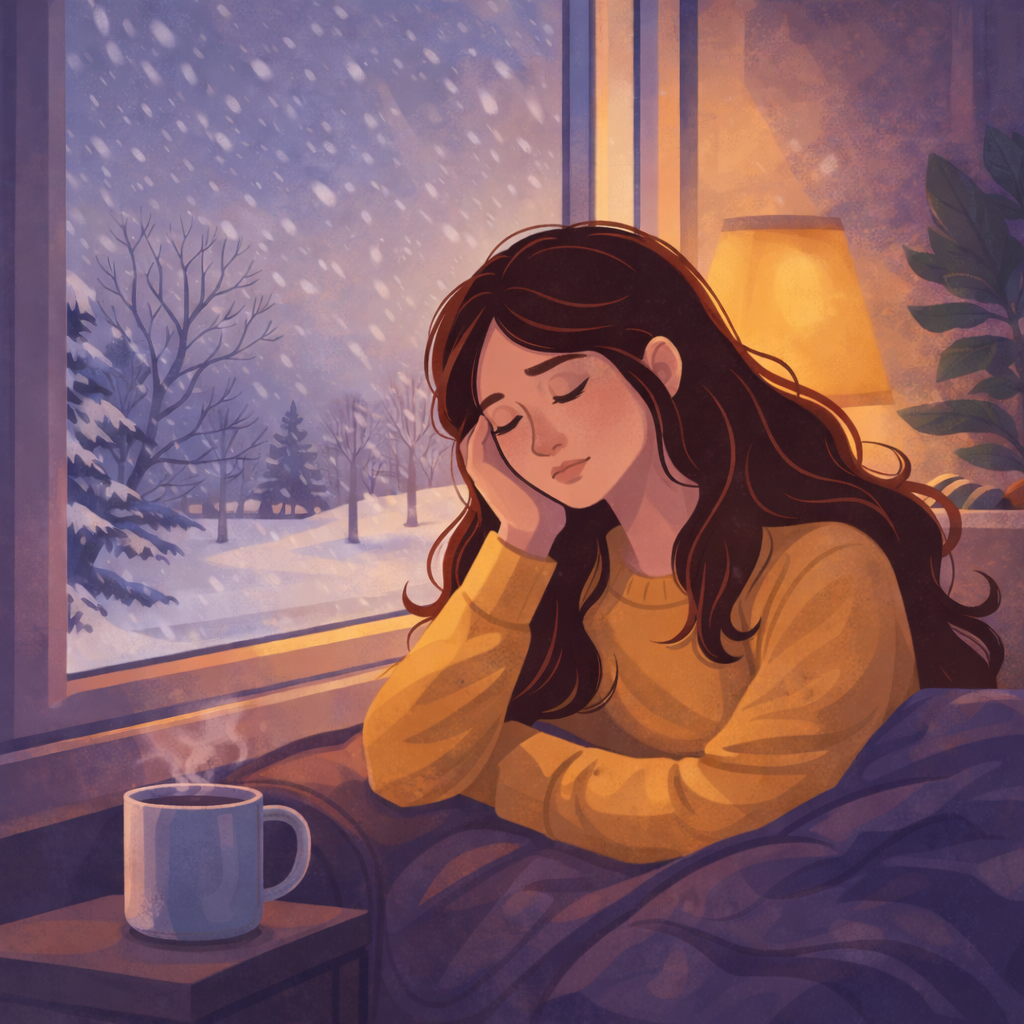
Have you noticed that your mood tends to shift depending on the time of year, especially during
these winter months? Maybe you find yourself feeling a bit more gloomy and withdrawn, and life
feels a bit heavier this time of year. You may also find that you have lower energy and changes
in your sleep. This is a completely normal and common human experience. Many people find
that their moods get lower as the days get colder and shorter. And it makes sense! Our moods
are highly influenced by environmental cues like the weather, how much sunlight we get, and
our ability to be outside and move our bodies. This phenomenon has a clinical term for it – –
Seasonal Affective Disorder, or aptly noted, “SAD.” SAD describes a pattern of mood changes
that occur in relation to seasonal changes, most commonly in the fall and winter months.
So, what exactly is SAD? It is important to note that SAD is a diagnosable clinical disorder and
is a form of depression. It is characterized by a predictable seasonal pattern and is linked to
changes in daylight, which can disrupt our circadian rhythm (otherwise known as our biological
clocks) and affects hormones which regulate mood, energy levels, and sleep. Some folks find
themselves to be more irritable or less interested in their usual activities. Others report
struggling with concentration, oversleeping, and just feeling sad. These changes can interfere
with our daily functioning and cause emotional distress Although SAD is a diagnosable
condition, people can experience seasonal changes in mood and energy without meeting full
criteria for the disorder. SAD and symptoms of SAD exist on a spectrum and can vary in
intensity.
So, what can we do if we are having some of these symptoms and struggling to navigate this
time of year? Below are some tips:
- Get some sunshine when you can! Lack of exposure to sunlight is linked to decreased
levels of serotonin (a mood-stabilizing hormone), as well as changes in our biological
clocks, making it harder to get up in the morning. If you are able, get outside in the
morning. Some people find sitting near windows when inside and even using a light
therapy lamp can be helpful. - Build a sustainable routine – going to bed and getting up around the same time daily can
be helpful in maintaining mental balance. Incorporating a midday walk or self-care
activity (such as enjoying a cup of tea, reading a fun book, or listening to music) can help
break up the days and keep you feeling on track. - Move your body. No intense exercise needed, but moving your body in ways that feel
comfortable and energizing is key. There are lots of low-impact exercises and yoga
practices online to check out if you would like some guidance - Stay connected with your loved ones. SAD can often keep us withdrawn and isolated
from others. Connecting with our loved ones can help regulate mood. - Talk to a mental health professional. If you are finding the impact of this season to be
difficult, getting some guidance and support from a professional can be beneficial. It is
important to seek help if you are finding symptoms getting in the way of your day-to-day
routine, especially when it comes to getting out of bed, engaging in work or school,
decreased interest in things you previously enjoyed, or just feeling consistently down.
SAD and its symptoms are very treatable.
In summary, this time of year can be particularly hard for many folks. Winter can slow us down.
If you are struggling with these darker months, you are not alone and there are many effective
and meaningful solutions to navigating this time of year. At Mind Therapy Clinic, we’re here to
support our clients through all of life’s changes, whether it’s navigating the shift in seasons and
weather, or moving through the changing seasons of our lives.